Beyond the Couch: Virtual Reality and Online Options for Depression

Updated: Apr 11
The Growing Crisis in Depression Care and the Promise of Digital Solutions
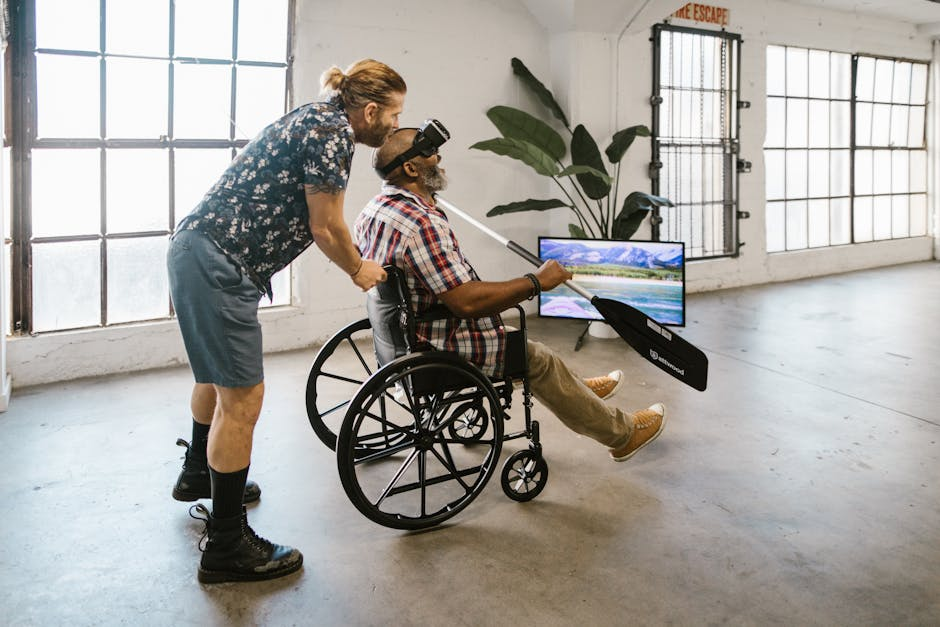
Virtual depression treatment has emerged as a critical solution to America's mental health crisis, offering evidence-based care that matches or exceeds traditional therapy outcomes while dramatically reducing wait times and access barriers. Here's what you need to know:
Quick Overview: Virtual Depression Treatment Options
Treatment Type | Format | Efficacy | Best For |
Internet-based CBT (iCBT) | Guided online modules with therapist support | 10x higher remission vs. waitlist (OR 10.30) | Mild-to-moderate depression, structured learners |
Video Telehealth | Live video sessions with licensed therapist/psychiatrist | Non-inferior to in-person (OR 0.84) | Those needing real-time connection |
Message-Based Therapy | Asynchronous text with therapist | Non-inferior to video (d=1.04 improvement) | Busy schedules, prefer writing |
Cognitive Behavioral Immersion (CBI) | Metaverse/VR environments with lay coaches | PHQ-9 reduction 16.44→11.62, GAD-7 14.79→11.29 | Tech-comfortable, seeking immersive support |
Smartphone Apps | Self-guided or minimally guided programs | Moderate effect sizes with guidance | Supplemental support, self-starters |
The statistics are sobering: 17 million Americans—7% of the population—experienced a major depressive episode in the past year, yet more than half receive no treatment. Before COVID-19, over 20% of U.S. adults would experience major depressive disorder in their lifetime, with 71% of cases going untreated. The pandemic tripled depressive symptoms, with up to 48% of citizens in developed nations reporting clinically significant depression.
The barriers to traditional care are formidable. In some of the largest U.S. cities, new patients wait an average of 25 days to see a psychiatrist. More than 60% of U.S. counties have no psychiatrist at all. Rural counties serve 27 million Americans with just 590 psychiatrists combined. These delays have real consequences—the odds of treatment response decrease by 9% for every week between the first consultation and follow-up.
Virtual depression treatment addresses these barriers head-on. Research shows that online interventions can achieve remission rates 10 times higher than waitlist controls, with effect sizes ranging from 0.50 to 2.00 in rigorous randomized controlled trials. Platforms offering virtual care reduce wait times to 1-5 days, and studies demonstrate that in-person therapy is not superior to virtual treatment for mild-to-moderate depression—moderate strength of evidence shows no significant differences in remission rates, response rates, or symptom severity reduction.
The evidence base has expanded dramatically beyond simple online CBT. Message-based asynchronous therapy shows non-inferiority to weekly video sessions, with patients achieving large effect sizes (d=1.04 for depression improvement) while enjoying the flexibility to engage without scheduled appointments. Emerging technologies like Cognitive Behavioral Immersion in metaverse environments demonstrate significant reductions in both depression and anxiety symptoms across ten sessions, with web-based social support predicting better outcomes.
As Dr. Yoon Hang Kim, a board-certified preventive medicine physician with over two decades of experience treating complex chronic conditions, I've witnessed how virtual depression treatment can serve as a cornerstone of comprehensive care—particularly when addressing the root causes that often underlie mood disorders in patients with multi-morbidity. My work integrating evidence-based virtual interventions with functional medicine approaches has shown that addressing systemic inflammation, metabolic dysfunction, and autoimmune processes alongside direct mental health treatment can dramatically improve outcomes for those with treatment-resistant depression.

The Efficacy of Virtual Depression Treatment in Modern Healthcare
When we talk about Virtual depression treatment, we aren't just talking about a "convenient alternative." We are talking about a clinical powerhouse. Recent meta-analyses have shifted the conversation from "Does it work?" to "How well does it work compared to the gold standard?"
Data from the Efficacy of Virtual Care for Depressive Disorders systematic review indicates that virtual interventions provide a high strength of evidence (SOE) for efficacy. Specifically, when compared to waitlist controls, virtual therapy shows an Odds Ratio (OR) of 10.30 for remission. This means a patient is ten times more likely to reach remission using a virtual tool than by waiting for an in-person opening.

Clinical Outcomes of Virtual Depression Treatment
The numbers tell a story of significant relief. In studies of Cognitive Behavioral Immersion (CBI), depression symptoms measured by the PHQ-9 scale decreased from a moderate-to-severe mean of 16.44 at the first session to 11.62 by the tenth session. This represents a statistically significant improvement (P < .01) with a moderate effect size.
Furthermore, scientific research on iCBT outcomes shows that these gains are not just flashes in the pan. Many patients maintain their progress for 6 to 18 months post-treatment. In some cases, such as the Wagner et al. (2014) study, online CBT showed a massive effect size of d=2.00 at a 3-month follow-up, actually outperforming the face-to-face group (d=1.04).
Guided vs. Unguided Interventions
One of the most frequent questions we hear is whether a person can just use an app on their own. While self-guided (unguided) virtual programs can be effective for some, the research heavily favors guided interventions.
Guided iCBT: Includes support from a therapist or "lay coach" via secure email or text. This format shows superior efficacy and higher patient acceptability.
Unguided iCBT: Purely self-help. While better than no treatment, it often suffers from higher attrition rates (up to 52%).
TeleCoaching: Minimal human contact (averaging 9-10 minutes per week) can drastically improve adherence and outcomes compared to purely automated support.
Comparing Digital Interventions to Traditional In-Person Therapy
For years, the "couch" was considered the only place where true healing happened. However, modern non-inferiority trials—studies designed to see if a new treatment is at least as good as the old one—have debunked this myth.
Research consistently shows that for mild-to-moderate Major Depressive Disorder (MDD), in-person therapy is not superior to virtual therapy. In fact, a network meta-analysis of CBT delivery formats found no significant differences in remission or response rates between the two.
Feature | In-Person Therapy | Virtual Depression Treatment |
Remission Rates | High | Comparable (OR 0.84 vs in-person) |
Working Alliance | Strong | Surprisingly High (Comparable to video) |
Wait Times | 25-Day Average | 1-5 Day Average |
Flexibility | Low (Fixed location/time) | High (Asynchronous options) |
Stigma | Moderate (Office visits) | Low (Private, home-based) |
Strongest Evidence for Virtual Depression Treatment Modalities
Which digital tools actually move the needle? The evidence is strongest for:
Internet-based CBT (iCBT): The most studied modality, focusing on behavioral activation and cognitive restructuring.
Video Telehealth: Synchronous care that mimics the face-to-face experience.
Message-Based Therapy: Asynchronous support that allows for "in-the-moment" processing.
Smartphone Apps with Guidance: Effective for tracking symptoms and delivering "micro-interventions."
Emerging Technologies: VR, Metaverse, and Cognitive Behavioral Immersion
We are entering a new era of "Cognitive Behavioral Immersion" (CBI). Unlike a standard video call, CBI uses metaverse environments and VR headsets to create a sense of "presence."
A pilot study on metaverse-based therapy revealed that these immersive environments might be particularly effective for anxiety reduction. Participants using VR head-mounted displays reported significantly lower anxiety symptoms than non-VR users.
Interestingly, the success of these programs often relies on web-based social support. In the metaverse, the ability to interact via avatars can reduce the "spotlight effect" and stigma, allowing patients—especially men, who are often underserved in mental health—to open up more freely. By the tenth session, researchers noted a significant decrease in anxiety (ηp²=0.26), proving that these high-tech "virtual couches" are more than just a gimmick.
Overcoming Access Barriers with Online Mental Health Solutions
In the states we serve—Iowa, Illinois, Missouri, Florida, Georgia, and Texas—geographic barriers are a major hurdle. If you live in a rural county, you are part of a population of 27 million people served by only 590 psychiatrists.
According to statistics on psychiatrist shortages, over 60% of U.S. counties lack a single psychiatrist. This creates a "treatment desert" where the only option is often an emergency room visit. Virtual depression treatment changes the math:
Wait Time Reduction: Instead of 25 days, virtual platforms often get you in front of a provider in 1 to 5 days.
Cost-Effectiveness: By removing the need for travel and reducing office overhead, virtual care can be scaled to reach those who previously couldn't afford consistent sessions.
Consistency: Because the "office" is in your pocket, follow-up appointments are missed less frequently. The odds of responding to treatment drop by 9% for every week you have to wait for a follow-up.
Integrative Approaches: The Role of LDN and Functional Medicine
At Direct Integrative Care, we believe that depression doesn't happen in a vacuum. It is often a symptom of systemic issues. This is where Functional Medicine meets mental health.
Many of our patients struggle with "multimorbidity"—having two or more chronic conditions. For example, research on mental disorders and chronic illness shows a high prevalence of depression among those with Type 1 Diabetes (T1D). In these cases, just talking about feelings isn't enough; we have to address the underlying physiology.
One tool we frequently utilize is Low-Dose Naltrexone (LDN). While traditionally used for addiction at high doses, at very low doses (1.5mg to 4.5mg), LDN acts as a potent anti-inflammatory for the central nervous system. By reducing neuroinflammation, LDN can "clear the fog," making psychotherapy and lifestyle changes much more effective.
Our root-cause approach looks at:
Systemic Inflammation: Is your gut health or an undiagnosed autoimmune issue driving your low mood?
Nutrient Deficiencies: Are you lacking the building blocks (like B12, Vitamin D, or Magnesium) needed for neurotransmitter production?
Metabolic Health: How is your blood sugar affecting your brain energy?
By combining Virtual depression treatment with these functional insights, we offer a path to healing that is truly comprehensive.
Frequently Asked Questions about Virtual Therapy
Is virtual therapy as effective as sitting on a couch?
Yes. For mild-to-moderate depression, multiple high-quality studies show no significant difference in outcomes between virtual and in-person therapy. In some long-term follow-ups, virtual patients actually maintained their gains better than those treated in person.
What technology do I need for Cognitive Behavioral Immersion?
While a VR head-mounted display (like a Meta Quest) provides the highest level of immersion and better anxiety reduction, many CBI programs can be accessed via a standard computer or smartphone. The key is the "virtual environment" and the social support within it.
How quickly can I see a provider through virtual platforms?
While traditional clinics often have a 25-day wait, virtual-first providers typically offer appointments within 1 to 5 days. This rapid access is crucial, as early intervention significantly increases the odds of a successful recovery.
Conclusion
The "couch" is no longer the boundary of mental health care. Whether through immersive metaverse environments, asynchronous messaging, or structured online CBT modules, Virtual depression treatment is proving to be a robust, effective, and accessible lifeline for millions.
At Direct Integrative Care, led by Yoon Hang Kim MD, we take this a step further. We don't just offer a screen; we offer a personalized, root-cause approach that integrates virtual therapy with functional medicine and cutting-edge options like LDN. We serve patients across Iowa, Illinois, Missouri, Florida, Georgia, and Texas with a limited patient panel to ensure you get the comprehensive, one-on-one care you deserve.
If you are ready to look beyond traditional options and address the root causes of your depression from the comfort of your home, we invite you to learn more info about integrative services and how we can help you reclaim your health.
Comments